

Cobot Machine Tending: What to Scope Before You Quote a Cell
Where does your CNC machine wait? How does the part arrive? What happens after a stop? What to define before a cobot machine tending cell is quoted.

Robot teleoperation lets a person control a robot with their own motion: the operator moves, and the robot follows. In research labs it is mainly used to record demonstrations that a robot can later learn from, an approach used in embodied AI data collection.
This guide covers what a teleoperation setup for data collection needs, and how LimX TRON 2 and Oli fit into one: the arms, the control interface, the sensing, the software and the hands. Knoxlabs can quote the hardware, software and setup support together.
Imitation learning needs examples of tasks done well. When a person performs a task through the robot, the system records what the robot senses and does. Those recordings become training data for embodied-AI models. The quality of the demonstrations depends on the control interface, the robot’s sensing, and how reliably the data is captured.
The arms need the reach, payload and repeatability for the tasks you want to demonstrate.
VR controllers, a leader arm or data gloves, depending on the robot and the task.
Cameras and an IMU, so the recording shows what the robot saw as well as what it did.
Tools to record, store and use demonstrations, plus simulation for testing.
The tooling that touches the work, matched to the parts and the task.
TRON 2 is a modular platform with dual-arm, bipedal and wheeled configurations. Its dual-arm configurations are built around two 7‑DoF arms, with these published specifications:
| Specification | Published value |
|---|---|
| Arms | Two 7‑DoF arms |
| End-effector load | Up to 5 kg per arm (3 kg in extended configurations) |
| Repeat positioning accuracy | ±0.5 mm |
| Maximum end-effector speed | 5 m/s |
| Teleoperation delay | 100 ms, reported by LimX from laboratory measurements. Actual values vary with environment and software version. |
| Sensing | Head and wrist RGBD cameras on dual-arm configurations, a waist RGBD camera and an IMU |
| Battery | 46.8 V / 9 Ah, replaceable. 20–80% charge in 30 minutes. |
| Interfaces | Ethernet, USB 3.0, EtherCAT, RS485 |
LimX also lists dual-arm safety boundary protection among the key functions, which matters during long recording sessions.
The four bundles are separate, complete configurations.
| Bundle | Meta Quest VR kit | Head unit | Base |
|---|---|---|---|
| #1 Three-in-One Suit | Included | Included | Fixed dual-arm stand, plus sole and wheeled legs |
| #2 Two-in-One Motion Suit | Not included | Not included | Sole and wheeled legs |
| #3 Dual-Arm Robot | Included | Included | Fixed dual-arm stand |
| #4 Dual-Arm Mobile Robot | Included | Included | Lifting stand and LimX mobile chassis |
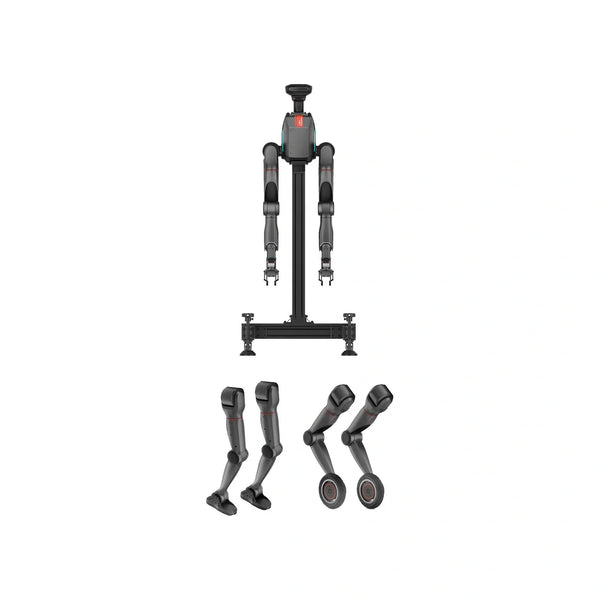
Bundle #1. Dual-arm manipulation plus sole and wheeled legs in one package.
View product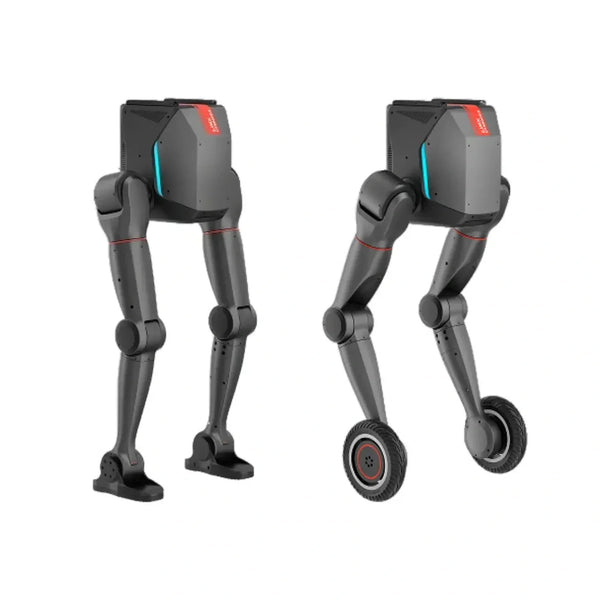
Bundle #2. Bipedal and wheeled motion research.
View product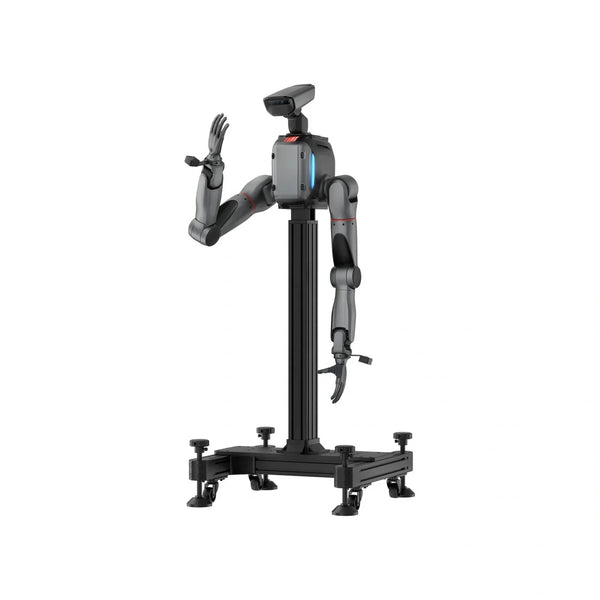
Bundle #3. A stationary dual-arm platform for manipulation research and teleoperation.
View product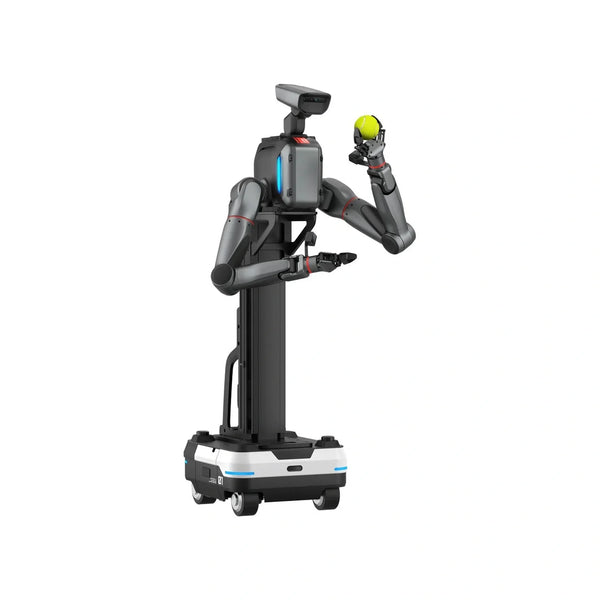
Bundle #4. Two 7‑DoF arms on a mobile base for mobile manipulation.
View productChoose the bundle for the work. Bundle #2 is aimed at bipedal and wheeled motion research, so it doesn’t include the VR kit or head unit. Bundles #2 and #3 cannot be upgraded to Bundle #1, so choose #1 if you need manipulation and mobility together.
Every bundle includes grippers on the forearms. For dexterous hands, LimX has tested a BrainCo hand configuration on TRON 2, and the exact Revo2 edition and mounting package must be confirmed for your build. See BrainCo Revo2 Basic Dexterous Hands.
Other third-party hands need configuration-specific engineering and validation of the mechanical, electrical, software, payload and safety details. Tesollo, for example, needs a custom wrist adapter, a separate computer and power validation. Browse dexterous hands and grippers.
TRON 2 bundles #1, #3 and #4 include a Meta Quest VR kit: headset, two controllers, data cable, adapter and manual. Other interfaces are common in teleoperation setups too.
The operator controls the arms through the headset and controllers in the included VR kit.
The robot arm mirrors the leader arm’s motion.
Browse leader armsGloves capture the operator’s hand and finger movement.
Browse data glovesThe product pages establish the included VR kit. If you want a different interface with TRON 2, ask Knoxlabs to confirm it for your configuration.
TRON 2 supports Python and C++, ROS 1 and ROS 2, and a WebSocket JSON API. NVIDIA Isaac Sim, MuJoCo and Gazebo are listed for simulation. Ubuntu 20.04 is the reference environment, and a low-level SDK is available for Windows.
LimX describes an all-in-one data platform that covers collection, cleaning and annotation through training, inference and task management. It also publishes FluxVLA Engine, an open-source platform with ready-to-use deployment scripts for TRON 2, covering the loop from data collection to real-world deployment.
Oli is a full-size humanoid platform. Its page describes it for research, development, teleoperation and embodied-AI experimentation, and lists a remote control API alongside sensor and motion APIs. Specifications vary by Oli edition, so confirm the exact edition with Knoxlabs before ordering.
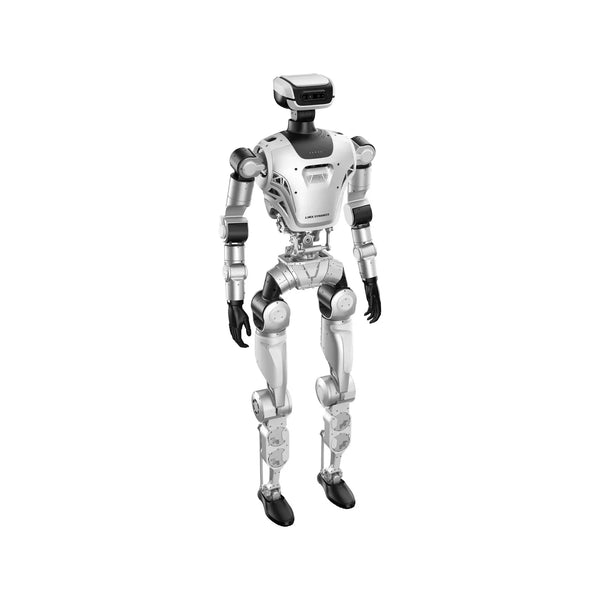
A full-size general-purpose humanoid platform with 7‑DoF arms, multiple end-effector options, depth cameras and a modular SDK.
View productPartial answers are fine. Share what you have and Knoxlabs will help fill in the rest.
| Area | Question to answer |
|---|---|
| Included components | Which items does your bundle include, and which do you still need to add? |
| Hands and gloves | Do you plan to add a third-party hand or glove? If so, request validation for your exact configuration. |
| US network setup | Have you reviewed the FCC and network setup notes on the bundle page? |
| Software | Which languages, frameworks and simulators will your team use? |
| Support | Do you want setup, SDK and ROS onboarding, or teleoperation setup quoted with the hardware? |
| Oli edition | If you are considering Oli, which edition, end effectors and compute do you need? |
Python and C++ SDKs, with ROS 1, ROS 2 and a WebSocket JSON API. Linux is the primary target, with Ubuntu 20.04 as the reference environment. A low-level SDK is available for Windows.
NVIDIA Isaac Sim, MuJoCo and Gazebo.
LimX has tested a BrainCo hand configuration, though the exact Revo2 edition and mounting package must be confirmed for your build. Tesollo, MANUS, SenseGlove and other third-party integrations need configuration-specific validation.
Yes. Device setup, SDK and ROS onboarding, integration validation, teleoperation setup and robotics deployment consulting can all be quoted alongside the hardware.
No. The four bundles are separate complete configurations, and Bundles #2 and #3 are not upgradeable to the Three-in-One configuration.
Related: leader arms and teleoperation, data gloves, dexterous hands and robot arms and platforms.
Knoxlabs scopes the setup to your use case, then quotes hardware, software and deployment support together, with help on setup, SDK and ROS onboarding, and integration validation. Browse the LimX Dynamics collection or explore our robotics solutions.


Where does your CNC machine wait? How does the part arrive? What happens after a stop? What to define before a cobot machine tending cell is quoted.


Compare the Keenon DinerBot T9, DinerBot T10, ButlerBot W3, CourierBot S100 and KleenBot C40. See which service robot fits restaurants, hotels, retail and healthcare, what each costs, and what your site needs before you order.

A cobot welding cell is more than an arm. See what belongs in the cell, how safety and fume extraction fit in, what drives the cost, and how to tell whether your weld is ready for a first review.

Before comparing robots, check whether the workflow is ready to automate. Eight questions on payload, reach, cycle time and variability, plus a checklist you can use before your first supplier conversation.