Keenon Service Robots Compared: Which Robot Fits Your Business?
Restaurants, hotels, stores, and care facilities are all short on staff hours, and many of those hours go to the same trips: plates to tables, towels to rooms, stock to shelves, mops across floors. Service robots take over those trips so people can spend their time with guests, customers, and patients.
Keenon builds robots for each of those jobs, and Knoxlabs carries five of them. This guide compares the DinerBot T9, DinerBot T10, ButlerBot W3, CourierBot S100, and KleenBot C40: what each one does, which industries it fits, what it costs, and what your site needs before you order.
Knoxlabs does more than ship the box. Hardware, software, and deployment support can be quoted together, and our team helps with configuration, integration, shipping, and support.
//
What Keenon Service Robots Do
Commercial service robots handle repetitive indoor jobs in spaces built for people. Keenon's lineup covers three kinds of work: delivery, room service, and floor cleaning.
All five robots map the building, plan their own routes, avoid people and obstacles, and return to charge on their own. They use the corridors and doors already in place, and with integration, the elevators too. A deployment is usually a site survey and configuration, not construction.
Staff stay in charge. Someone loads the tray or compartment, picks a destination on the screen, and the robot does the walking.
Specs from Keenon's official product pages. List prices from knoxlabs.com.
//
Robots for Restaurants: DinerBot T9 vs. T10
25–35%of revenue goes to labor at quick-service locations
Labor is the cost restaurants feel most. Citing National Restaurant Association benchmarks, QSR Pro puts labor at 25–35% of revenue for quick-service locations. QSR Research Hub reports that food-service workers often quit at more than 3% of the workforce each month.
Robots for restaurants don't replace servers. They take over the walking. A robot waiter carries plates out and dirty dishes back, so servers stay at the tables where tips and reviews are earned.
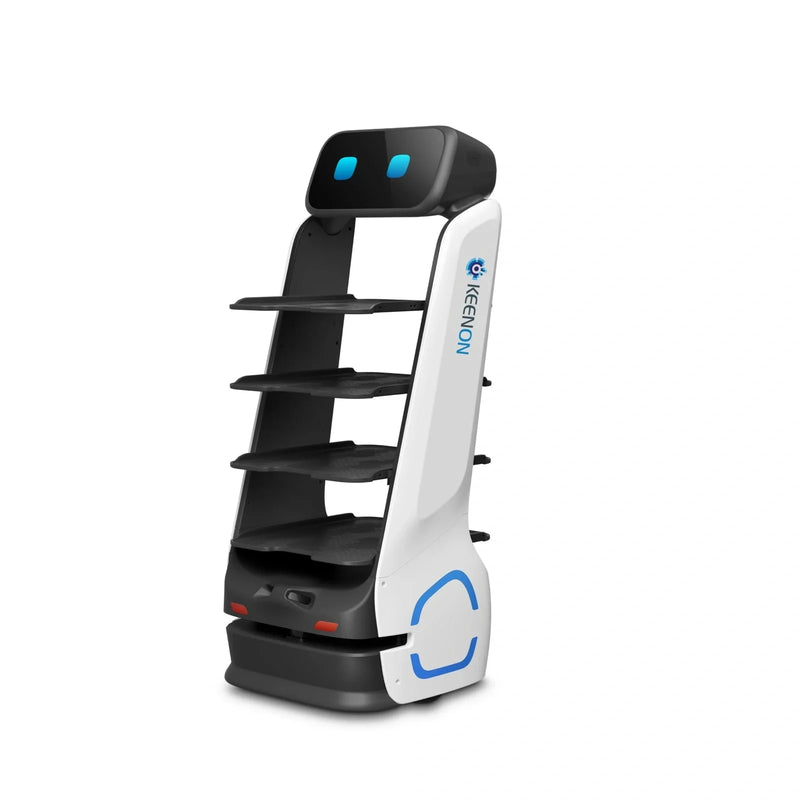
DinerBot T9: high-capacity tray delivery
The T9 is built for volume. It carries four trays at up to 10 kg each, 40 kg in total, with adjustable tray heights for plates, bowls, and bus tubs. A battery rated for up to 18 hours covers a full day of service, and it docks and charges on its own.
It needs a 70 cm (27.6 in) path. Busy dining rooms, buffets, banquet halls, and fast casual concepts with long runs from kitchen to table get the most out of it.
Available at Knoxlabs
Keenon DinerBot T9
Four trays, 40 kg capacity, and up to 18 hours of runtime for high-volume food service.
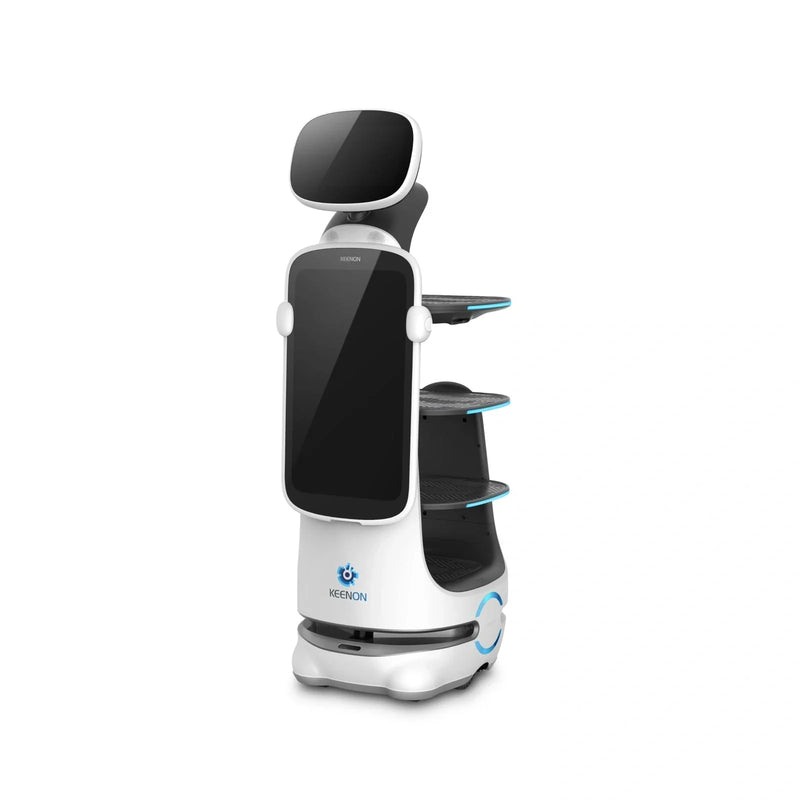
The T10 delivers food and sells while it does. A 23.8-inch screen shows menus, specials, or ads between runs, and its movable head turns toward guests. AI tray detection recognizes when a tray has been cleared, so the robot heads back without anyone pressing a button.
It carries 40 kg on an open tray and fits 59 cm (23.2 in) aisles, the narrowest in the lineup. Battery life runs 9 to 12.5 hours. It suits restaurants with tight layouts and venues where the robot doubles as a greeter or marketing screen, including retail.
Available at Knoxlabs
Keenon DinerBot T10
Food delivery with a 23.8-inch promotions screen, built for tight aisles and customer-facing service.
Choose the T9 if trip volume and long shifts matter most. It has the bigger battery, multiple trays, and the lower price.
Choose the T10 if your aisles are tight or you want the robot to promote specials while it works.
Many busy restaurants run more than one robot. Fleet size depends on route length, trip frequency, and the peak hour, not the average one.
//
Robots in Hotels: ButlerBot W3
Hotel teams field a steady stream of small requests: towels, toiletries, chargers, a takeout order left at the lobby. Each one pulls someone off the front desk or out of housekeeping. Robots in hotels take those runs.
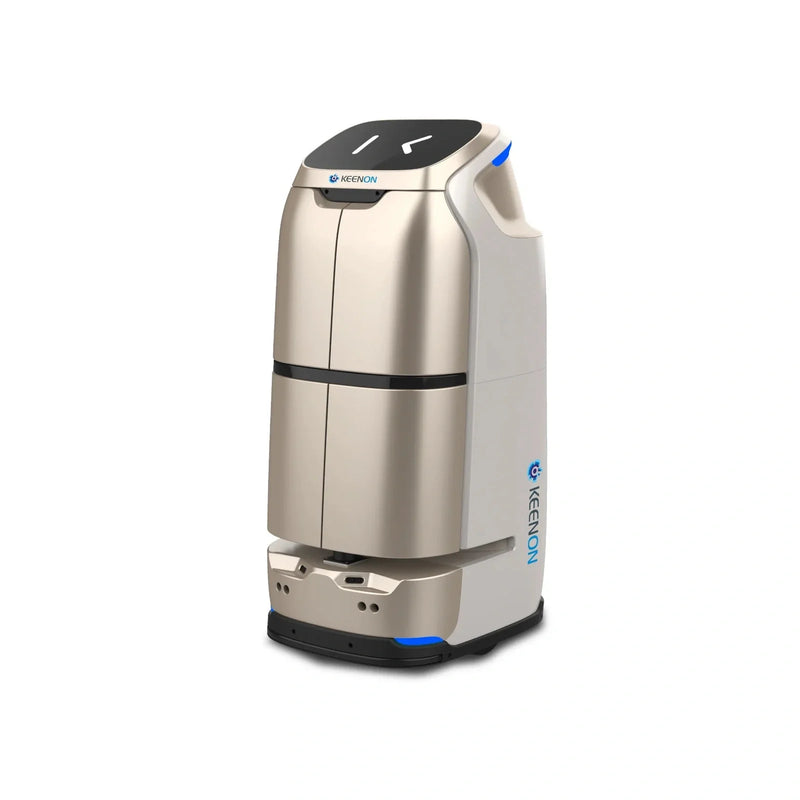
The ButlerBot W3 carries up to 20 kg in as many as four enclosed compartments with automatic doors, so items stay private and protected on the way up. It rides elevators through IoT integration, so one robot can serve every floor. Keenon rates the battery at up to 12 hours, based on three five-minute deliveries an hour.
It needs a 70 cm (27.6 in) path, which most hotel corridors clear easily. For heavier back-of-house loads such as linens and luggage, hotels pair it with the CourierBot S100 below.
Available at Knoxlabs
Keenon ButlerBot W3
Enclosed, multi-compartment delivery for guest rooms, with elevator riding for multi-floor buildings.
Indoor Delivery for Back-of-House and Retail: CourierBot S100
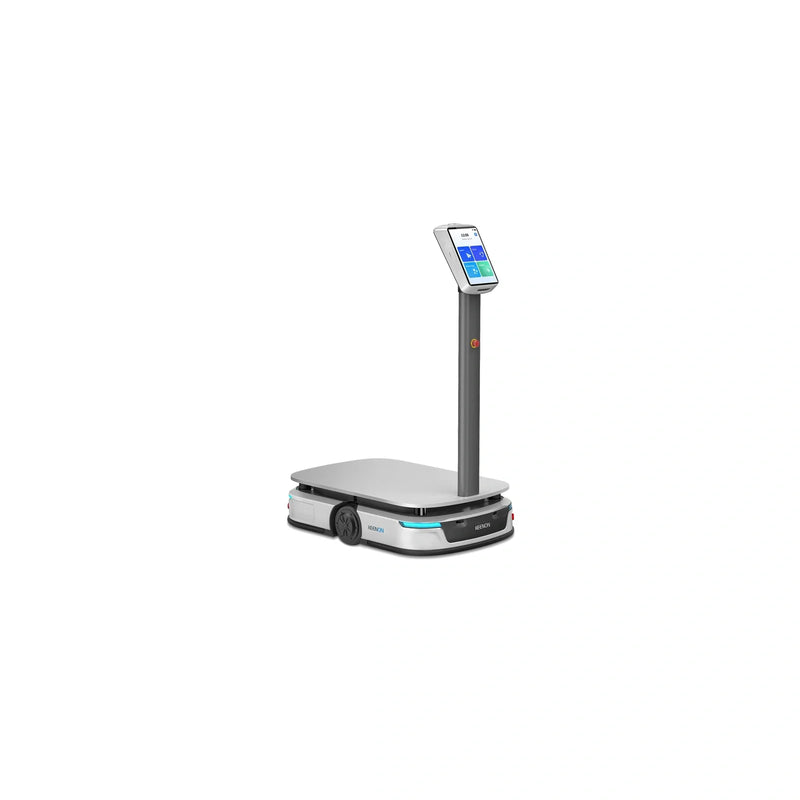
Not every delivery is a plate or a towel. Supplies, packages, inventory, and carts of linens are heavy, and moving them eats hours that staff could spend elsewhere. The CourierBot S100 is Keenon's indoor delivery robot for those loads.
It carries more than 100 kg (220 lb). Obstacle avoidance covers the full 360 degrees, and three emergency stop buttons give staff direct control. Battery life is up to 8 hours, and a 15-second battery swap keeps it running through back-to-back shifts.
The S100 needs a 90 cm (35.4 in) path, the widest in the lineup. It fits hotels, grocery and convenience stores restocking from the backroom, retail floors, offices moving mail and supplies, and light industrial sites.
Available at Knoxlabs
Keenon CourierBot S100
Heavy-load indoor delivery for supplies, packages, and inventory, with a swappable battery for continuous shifts.
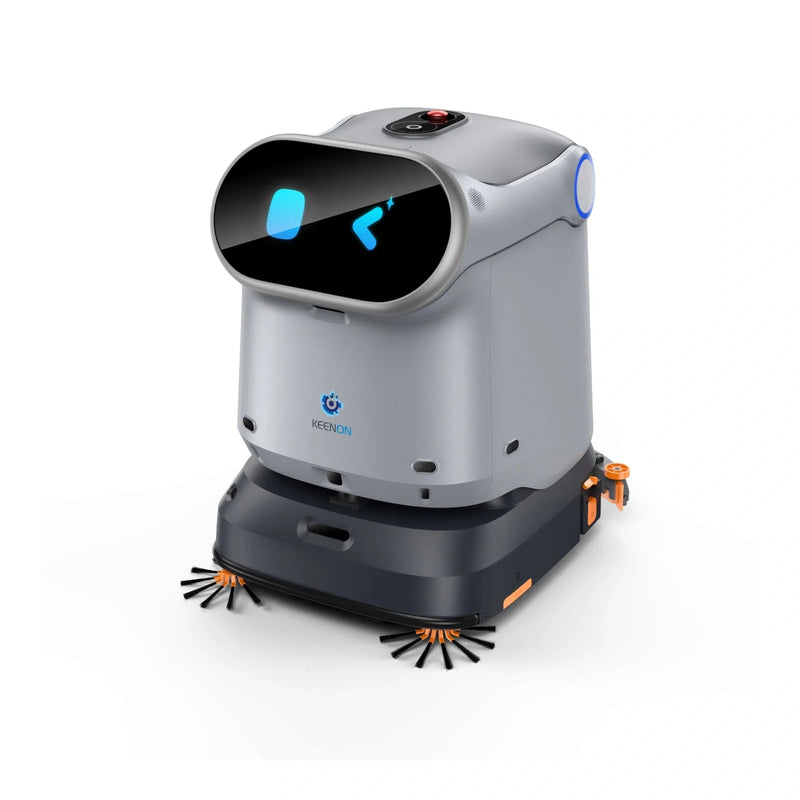
The KleenBot C40 sweeps, vacuums, scrubs, and dries in a single pass, covering up to 11,840 sq ft (1,100 m²) an hour. It scrubs for up to 5 hours on a charge and handles hard floors and short-pile carpet. Like the delivery robots, it can integrate with elevators and doors.
Hospitals and senior living communities run on the same kind of repetitive trips: meals to rooms, linens, supplies, items moving between departments. Staffing in both is stretched, and every trip a nurse or aide doesn't have to walk is time back with patients and residents.
The ButlerBot W3's enclosed compartments keep deliveries private, and elevator riding lets it work across floors. The CourierBot S100 moves heavier carts of supplies and linens. In senior living dining rooms, a DinerBot T9 can carry meals and clear tables, and the KleenBot C40 keeps hallways and common areas clean on a schedule.
Healthcare settings bring extra requirements around infection control, privacy, and clinical workflows. Talk to our team about your facility before choosing a model.
Guest-room delivery, linens and luggage, lobby and corridor cleaning
Retail stores and malls
T10, S100, C40
Promotions and guidance, stock moves, floor cleaning
Grocery and convenience
T9, T10, S100, C40
Restocking, in-store delivery, aisle cleaning
Hospitals
W3, S100
Private deliveries, supplies and linens across floors
Senior living and nursing homes
W3, T9, C40
Meals to rooms and dining areas, common-area cleaning
Offices and commercial buildings
W3, S100, C40
Mail and supplies, cross-floor delivery, floor cleaning
Light industry
S100
Moving parts and materials between stations
//
What Do Keenon Robots Cost?
Keenon robots at Knoxlabs list from $16,400 to $19,600 per unit. The DinerBot T9 is $16,400. The DinerBot T10, ButlerBot W3, CourierBot S100, and KleenBot C40 are each $19,600.
The list price covers the robot. A full deployment can also include configuration, elevator or door integration, software, and ongoing support. Knoxlabs quotes all of it together, so you see the complete cost before you commit. Financing is available for qualified business buyers.
Most sites need no building work. These five checks decide whether a robot will run smoothly from day one:
Match the robot to the task. Food runs, room service, heavy transport, and cleaning each call for a different model.
Measure your narrowest path. The T10 needs 59 cm, the C40 65 cm, the T9 and W3 70 cm, and the S100 90 cm.
Check Wi-Fi and elevators. Robots rely on wireless coverage along the route, and cross-floor delivery needs elevator integration.
Size the fleet to the peak hour. Route length, trip frequency, and your busiest hour decide how many robots you need.
Plan setup and support. Mapping, configuration, staff training, and service should be settled before the robot arrives.
Knoxlabs reviews your floor plan and routes with you, sizes the fleet, and handles configuration, integration, shipping, and support. Keenon deployments also come with partner support from ProServBots.
//
Frequently Asked Questions
Which Keenon robot is best for a restaurant?
The DinerBot T9 suits most busy restaurants, with four trays and up to 18 hours of runtime. The DinerBot T10 is the better choice for tight aisles or when you want an on-screen promotions display. The KleenBot C40 handles floors after close.
What is the difference between DinerBot T9 and T10?
The T9 focuses on capacity and runtime, with four trays and a longer battery at a lower price. The T10 adds a 23.8-inch promotions screen and AI tray detection, and fits narrower aisles.
What is the difference between ButlerBot W3 and CourierBot S100?
The W3 delivers smaller items in enclosed, private compartments, which suits guest rooms and patient rooms. The S100 carries heavy loads of over 100 kg for supplies, packages, and inventory.
How much does a robot waiter cost?
At Knoxlabs, the DinerBot T9 lists at $16,400 and the DinerBot T10 at $19,600. Total cost depends on fleet size, integration, and support, which Knoxlabs quotes together.
Can delivery robots ride elevators?
Yes, with integration. The ButlerBot W3 rides elevators to reach every floor, and other Keenon models can be set up for multi-floor routes. Elevator integration is checked during the site review.
Do service robots need building work?
Usually not. They navigate existing corridors and doors and need a charging spot. Wi-Fi coverage and elevator integration are the two things to check early.
Can I finance a service robot instead of paying up front?
Financing is available for qualified business buyers. Ask about options when you request a quote.
Are Keenon robots used in hospitals and senior living?
Delivery and cleaning robots suit both settings. The W3 and S100 handle deliveries and supplies, the T9 can serve meals in dining areas, and the C40 cleans common areas.
A cobot welding cell is more than an arm. See what belongs in the cell, how safety and fume extraction fit in, what drives the cost, and how to tell whether your weld is ready for a first review.
Before comparing robots, check whether the workflow is ready to automate. Eight questions on payload, reach, cycle time and variability, plus a checklist you can use before your first supplier conversation.
Join Knoxlabs and Gatlin Robotics in Santa Monica on October 15 for robots, robotics hardware, and conversations with the people building them. Request to join through Luma.
After hands-on training with Xsens, the Knoxlabs team explains how Xsens Link and Humanoid software fit into teleoperation and motion-data workflows—and what robot-specific work still remains.
A commercial floor cleaning robot can take over the nightly floor pass in restaurants, retail stores, and schools. Compare autonomous floor scrubbers with traditional equipment, the specs that matter, real cost ranges, and how to judge ROI.